Category Archives: Sports

Running Essentials (Vol. 1)

Being a runner myself, and working with a good amount of road warriors leaves me sympathetic to some of the wear and tear suffered due to this (sometimes) healthy addiction.  While injuries and causes come in all shapes and sizes, there remain various foundational issues that can be applied universally in order to curtail potential issues along the kinematic chain.

Hyper contraction of the hip flexors is a common issue in our society mostly due to the amount of time we spend seated.  In the car during a commute, at a desk glued to computer or a couch glued to the television, around the table while breaking bread with family and friends, even putting in miles on the bike; these all lend themselves to a shortening of the front side hip flexors.

Two immediate issues created by this are a higher propensity for low back pain, and a longer stride out in front while running, which leads to a higher risk of injury due to the increased instability that accompanies a longer lever arm.

Low back pain is perpetuated by shortening and tightness in the chief hip flexor, the psoas.  This muscle has its origin on the lower lumbar spine and when over contracted, will pull down on the lower spine when standing, creating discomfort, and the perception that standing causes pain.  In actuality, while the discomfort is indeed experienced while vertical, the catalyst can be the shortened psoas due to bouts of long, uninterrupted sitting.

Tight hip flexors become an issue while running as it can lead to a longer stride out in front.  The further that leg lands out in front of you, the less stability.  This can interfere with an optimal strike, pronation, and ankle and knee stability.  Unless you are a sprinter or huddler this also is a less efficient way to run.

Modifying gait is a multi-pronged task, with frontside dominance being a key factor.  The flipside to this shortening of the hip flexor is the lengthening and weakening of the antagonist hip extensors, mainly the gluteus maximus and hamstrings.  These posterior chain muscles are designed to move us efficiently and powerfully through life, including while running.

Again we look to front side dominance now being a logical contributor to strain and aggravation to the posterior structures and tissue including the hamstrings, piriformis, SI joint and surrounding ligaments.

Easiest way to begin to avoid this is by breaking up the long, uninterrupted sitting.  Obviously total avoidance of sitting is not possible, but in most cases breaking it up is.

Try to get up and move AT LEAST twice every hour or utilize the increasingly popular and available stand up desk.  Set a silent timer on your phone as a reminder to get up every 15-30 minutes.  Not only will you create more of a balanced state between your hip flexors and extensors (advantageous for low back pain and running) but you will be metabolically awakening your system, which can help control blood sugar/insulin, as well as weight.

Another way to combat this is by working on your movement pattern and neurological firing to the hip extensors.  If when you squat your knees track forward past your mid foot, you are exhibiting front side dominance.  A good way to work on this is to practice getting into a squat with your toes underneath a chair.  The seat of the chair will serve as a barrier to your anteriorly drifting knees and force you to utilize and fire the gluteus maximus, the main hip extensor and power generator during a proper stride.

In directly addressing the actual tightened hip flexors, a foam roller works well with the quadriceps.  However the psoas (and adductors) become more difficult to release due to their positioning and may take the assistance of a trained practitioner in order to reap optimal results.

(The facial expressions and sound effects produced by patients undergoing the psoas release in our office serves as an attestation as to the necessity of the treatment.)

The front side dominant, tight hip flexor issue is obviously not the end all be all when it comes to addressing any problem a patient may present with, nor are the methods mentioned the complete package for doing so.  However, more often than not, there is some hip flexor involvement with low back pain or lower extremity issues in runners and non-runners alike.  Therefore the suggestions mentioned above are a solid addition to any athlete’s preventative or maintenance program, in order to intelligently reduce the risk of potential injury.

Be well and go get it.

Are Injections Your Best Option For Pain?

One of the more common modes of musculoskeletal pain treatment these days is that of an injection.  While various variations and alterations are made regarding the exact content and site of injection, in the majority of cases the basic formula remains the same.

There are two main components to an injection.  First we have the corticosteroid in which cortisone is commonly utilized.  The role of the steroid is to aggressively attenuate inflammation by dampening the immune system.  When you are inflamed, you will usually be feeling some level of pain or discomfort as the chemical mediators involved in the inflammatory process stimulate the pain pathways of your nervous system, and thus the perception of pain is experienced.

While this may effectively address a compartmentalized target, it does so at the expense of the rest of the body.  Inflammation is a main and necessary component of the immune system.  A steroid dampens the immune system, lessening the inflammation, but also compromising  overall immune function which is kind of important.

The widespread effects of steroids are seen when they are utilized as a method of control for an autoimmune condition.  In an autoimmune disease, the immune system has become imbalanced and has turned against the body that houses it, causing tissue destruction.  Patients who find themselves in this predicament often find relief with the use of corticosteroids as it knocks the entire immune system down a level, thus temporarily lessening the self destruction (rather than rebalancing the immune system, addressing the root of the dysfunction).

Some other side effects of corticosteroid injections include risk of infection, hyperglycemia (elevated blood sugar), peripheral nerve damage (median nerve commonly injured in carpal tunnel injections) adrenal insufficiency (adding dysfunction to the commonly over worked “stress glands), immunosuppression, osteoporosis, and actual TENDON RUPTURE.

The tendon element can get dicey, as injections are now commonly utilized for such a wide range of sport type injuries including sprains and strains, bursitis, tendonitis, plantar fasciitis, etc.  The logic behind aiming an injected dose of a corticosteroid at what is presumed to be a tendon issue comes into question when we discover the tendon doesn’t actually succumb to inflammation.

The term tendonitis (meaning inflammation of the tendon) is actually a misnomer due to the lack of inflammation. The proper term for the reduced mobility, strength and discomfort originating in the tendon is actually tendinosis but many clinicians (present company included) continue to use the outdated, falsely descriptive term.

As we explained above, the therapeutic property of the corticosteroid intended to be utilized in this instance is that of an anti-inflammatory agent.  If the tendon is incapable of becoming inflamed this is a poorly misguided effort.  Additionally, studies have shown that injections weaken the tendon and can actually lead to eventual  rupture.

The other commonly used component of these injections is a local anesthetic like lidocaine.  This provides immediate relief to the area as the pain signals are silenced by this chemical agent.

The dangerous aspect of using this or any numbing, pain blocking agent is that it puts a gag on the body as it tries to convey the idea that something isn’t right.  The underlying dysfunction persists, but miraculously you feel fine.  This creates a false sense of security and can lead to doing too much, too soon causing re-injury, escalation of the injury or a new injury.

Injections for common musculoskeletal injuries have become so popular due to our constant demand for the quick, easy fix.  The inflammation; the pain; they came about for a reason.  Something isn’t right in the way we move, our strength, stability or mobility and it has manifested in the irritation of a particular and tissue and now you and your potentially reduced training load.

If you want to be in this thing for the long haul, capture this opportunity to discover the breakdown, remedy the issue, and make your parts happy (and quiet) again.  As annoying, nagging, uncomfortable, disruptive, (insert adjective) as pain can be, it truly is a gift from the body letting you know to knock it off or make a change.  Simply silencing this signal may get you through temporarily.  It may even provide lasting relief.

However, it may not. It may actually leave you right where you started or worse.  The alternative can be more time consuming.  The alternative may take a little trial and error to find a unique to you treatment program, rather than a one size fits all remedy.  The alternative may involve looking beyond an injection site for pain and addressing the whole person and kinematic chain.

To me this non-invasive approach logically makes more sense as the primary mode of intervention.  If it does to you as well, and you’d like to give it a shot before getting a shot, we are ready and waiting to collaborate with you.


REFERENCES

http://www.ncbi.nlm.nih.gov/pmc/articles/PMC2084363/

http://www.m.webmd.com/a-to-z-guides/cortisone-injection-soft-tissues-joints

To Stretch or Not to Stretch

Pop into most gyms or swing by any race and you’re more than likely to observe numerous motivated souls performing the time honored tradition of stretching.  Starting with the good old days of gym class and continuing well into organized sports, stretching became ingrained in our minds as a necessary, injury preventative task suitable for pre and/or post activity.

But is this alleged work out staple really beneficial?

Could it actually be hindering our performance?

If so, is there a better alternative?

First off, let’s look at the most basic goal of the static stretch.  (Static stretching refers to getting into a position that elongates some aspect of the soft tissue, and holding it for some duration of time.) Outside of general habit, people tend to resort to stretching when they feel tight.  If this is the case, the goal of the stretch would be to “loosen up” by way of elongating tissue.  However, studies have shown that in order to actually physically lengthen the muscle by way of static stretching it must be held for 3-5 minutes, 4-6 days a week, for 10-12 weeks.

Moreover static stretching actually diminishes blood flow to the area being stretched.  We don’t want this when dealing with an injured or injury prone tissue that requires the oxygen and repair mechanisms delivered by blood.  And we definitely don’t want this when preparing to participate in an event where the muscles being utilized require any type of stamina or endurance, of which is metabolically maintained via utilization of oxygen that is delivered by, you guessed it, blood.

From a neurological standpoint, static stretching actually diminishes feedback to the central nervous system, especially to a part of the brain known as the cerebellum.  This is a part of your brain that is highly involved in motor coordination, balance and proprioception (having a sense of where your body parts are in space when not looking at them); a part of your brain that you want to be on point at all times, but especially when engaging in any type of activity.  Slower activation and reaction times, decreased coordination and balance all add up to subpar performances and increased likelihood of injury.

So what other options exist?

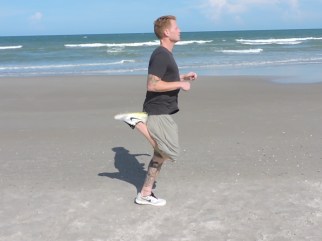
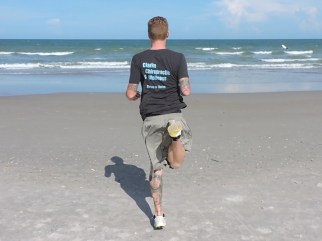
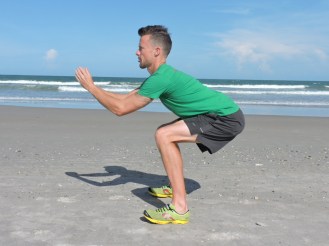
Well, you can start by implementing dynamic stretching as your warm up.  This would include movements like walking lunges, “butt kickers,” air squats, shoulder circles, etc.

WALKING LUNGE:

“BUTT KICKERS:”

AIR SQUATS:

In preparation for any activity a smart move would be to increase blood flow to the region being utilized.  We’re learning that static stretching can actually do the opposite.  However, performing a proper dynamic warm up, including a basic light jog, encourages blood flow, which equals more oxygen and quicker waste removal from the muscles.  It also literally warms up the tissue, many times alleviating that tight feeling which provokes so many of us to stretch in the first place.

So you decide to be proactive and try something different; ditching the static holds and intelligently warming up, yet you still feel stiff, tight and an overall lack of mobility.  So much so that you’re tempted to revert to your old ways and bend over and touch your toes for 30-60 seconds.  Slow down there. We just explained that unless you perform static stretching for an extended time over at least two months, the tissues don’t actually lengthen.  Contrarily this method also diminishes blood flow to the tissue and feedback to the brain.

A better option at this point would be aiming to improve mobility in your tissues.  For various reasons, whether it postural or remnants of an old injury, our tissues lose their full range of motion due to scar tissue or adhesions within the tissue.  When an injury occurs, traumatic or otherwise, eventually your body lays down new tissue in order to repair the damage.  Many times due to various reasons, the tissue does not get laid down in the proper orientation and can lead to a lack of mobility or discomfort within the tissue.

These adhesions or scar tissue can be addressed utilizing soft tissue mobilization techniques.  This includes everything from the foam roller or LAX ball to techniques frequently applied in our office, mainly consisting of deep tissue stripping, Graston and Active Release Therapy (ART) in order to efficiently eliminate these adhesions and restore mobility to the tissue.

It should also be noted that simply applying these techniques to soothe discomfort and restore mobility is only part of the job.  The next stage comes in the form of post mobilization movements.  We like to implement a unique, flowing combination of isometric and eccentric contraction, mixed with PNF stretching to encourage optimal recovery and stability.

The one thing static stretching may indeed supply is a mental benefit, especially if it’s been part of your regimen for years.  At that point it’s more of a habit that many hold on to for dear life, like our toes when performing that awkward hamstring stretch.

However, as new research and information becomes available it should be analyzed and if it makes sense, applied. This holds true for all aspects of health from high intensity interval training to eliminating gluten from your diet.  Even if you are one of the fortunate souls to have skated though an active life unscathed up to this point, if you’ve already made the effort and lifestyle changes to achieve a higher level of health, it would be foolish not implement the latest sound strategies due to habit or sheer stubbornness.

If you’re experiencing stubborn stiffness or tender tightness, or are still suffering residual effects from an injury that should’ve packed its bags and vacated a long time ago, we would be glad to collaborate with you in working towards the common goal of restoring mobility, banishing loitering injuries, and providing you with the tools to enable continued play well into the future.

REFERENCES

Page P. CURRENT CONCEPTS IN MUSCLE STRETCHING FOR EXERCISE AND REHABILITATION. International Journal of Sports Physical Therapy. 2012;7(1):109-119.

Wilson JM, Hornbuckle LM, Kim JS, et al. Effects of static stretching on energy cost and running endurance performance. J Strength Cond Res. Sep 2010;24(9):2274–2279

Nelson AG, Kokkonen J, Arnall DA. Acute muscle stretching inhibits muscle strength endurance performance. J Strength Cond Res. May 2005;19(2):338–343

Behm, D. G., Bambury, A., Cahill, F., Power, K. Effect of Acute Static Stretching on Force, Balance, Reaction Time, and Movement Time. Medicine & Science in Sports & Exercise 2004, 36, 8, 1397–1402.

Comana Fabio. “Debunkning Fitness Myths: Stretching” American Counsil on Exercise 2011, http://www.acefitness.org/blog/1575/debunking-fitness-myths-stretching


What’s With that Weird Tape?

If you’re a sports fan like myself, you can’t help notice the increasing presence of an oddly positioned, colored tape being donned by athletes of all sports.  The use of this tape generated much publicity when beach volley ball icons Kerri Walsh and Misty May sported it during their 2008 Olympic gold medal run in Beijing.  Top tennis stars Serena Williams and Novak Djokovic, and most recently, NBA superstar and huge proponent of chiropractic, Derrick Rose have been seen taking advantage of the tape’s therapeutic properties.   

Or maybe you’ve noticed someone in the gym or on the streets fashionably accessorizing with the colorful tape.  The point is, it’s out there and more and more people are utilizing it.

But what exactly is it and what does it do?

In most cases, what you are seeing is a form of athletic tape known as kinetic tape.  The tape had its origin as kinesiotape by Dr. Kenzo Kase in the 1970s.  Since then, other brands such as Rock Tape or Strength Tape have followed suit with slight modifications.

While various manufacturers boast their own techniques to the actual taping method, the main purposes of the tape is shared.  Kinetic tape is a form of tape that can provide support and stability without limiting range of motion.  This is a huge deal in that in order for all of us to function optimally, we need to have access to the full range of motion our joints were designed to provide.  This is key for all of us, but is imperative for an athlete.

Another benefit to kinetic taping is that it helps to reduce swelling and inflammation.  Permitting full range of motion allows this by encouraging venous return of blood and the lymphatic system (waste removal), but the tape actually does this in additional ingenuous ways.

The first way the tape does this is by lifting the skin off of the underlying tissue and allowing room for accumulated fluids to exit.  Another way inflammation and swelling is reduced can be facilitated by a distinct taping method in which the tape is cut into individual strips which resemble fingers. When the patient moves, these fingers then lightly squeeze the area of involvement, creating a massaging effect that encourages the removal of stagnant fluids in the area.  This method is quite useful for the acutely injured athlete who is trying to limit the initial swelling.

In addition, properly applied kinetic tape can provide an all natural analgesic or pain-killing effect.  One way this is done is by lessening inflammation in the ways described above.  The chemical mediators of inflammation excite the nerves that transmit pain signals, so anytime we can lessen inflammation, we can also lessen pain.

The second way the perception of pain is dampened by the tape is by closing what is known as the physiological pain gate.

You see, nerves vary in size and speed of transmission, with the bigger, faster nerves overriding the smaller, slower nerves.  Luckily for us, painful stimuli is mainly transmitted by the smaller nerves, while the sensation of touch takes a ride on the larger, faster nerves.  One way to intelligently and naturally lessen pain is to override the signal by stimulating nerves that pick up touch and enter the spinal cord at the same level.

It is this mechanism that serves as the explanation behind why we instinctively shake or rub the finger we just smashed with a hammer.  By doing this you are literally closing the gate on the transmission of the pain.  Unfortunately, as soon as the stimulation by way of rubbing or shaking ceases, the gate re-opens and the pain signals are once again permitted to reach the brain where the perception of pain occurs.

Kinetic tape conveniently comes into play here by providing constant stimulation to the painful area, thus closing the pain gate.  This serves as an extremely practical, temporary fix while we work to fix the underlying cause of the pain.

Neurologically, the tape serves a therapeutic purpose providing feedback from the taped area to our brain.  Aside from pain, when we are injured, feedback from the injured area tends to become inhibited or lessened.  This can lead to further issues as things like balance or proprioception (the sense of where our body or body parts are in space) is largely influenced by feedback from the actual body part.  Kinetic taping provides neurological stimulation to enhance the necessary communication between the central (brain and spinal cord) and peripheral nervous systems.

At Clarke Chiropractic and Wellness we utilize kinetic taping quite frequently when treating athletes and other patients in order to take advantage of the therapeutic benefits described above.  It should be noted that ideally, the tape is used like any other type of therapy; as an adjunct to chiropractic care and temporarily while we correct the underlying issue.  However, many athletes with chronic issues and a schedule or lifestyle that doesn’t always allow adequate rest for healing absolutely love being routinely taped as well.

If you are curious and would like to explore the world of all natural treatments like kinetic taping feel free to call us at anytime.

I’m ready when you are.

Have You Tried Active Release Therapy?

One of the most desired and effective soft tissue treatments we utilize at Clarke Chiropractic and Wellness is that of active release therapy or ART.  My Crossfitters swear by this form of therapy and we normally implement it to some degree or another on every patient.

So what is it?

What we are talking about here is a soft tissue technique whereby the practitioner applies pressure in a specific direction to a specific area of an involved muscle or ligament while the patient then moves through a specific range of motion.  You may note by my use of the 3 “specifics” that proper application of this technique requires a thorough knowledge and understanding of human anatomy and the mechanics of all individual muscles.

It goes way beyond simply massaging a painful area, and includes identifying and addressing all other structures involved with the problematic area.

For example, one of the most common problem areas most athletes come in for is the shoulder, and it’s usually due to anterior or front side shoulder pain.  Rather than directing all treatment at the spot of pain manifestation, the entire shoulder complex is addressed, sometimes including up to 10 separate muscles.  The shoulder complex, like many joint complexes in the body is just that, complex; and addressing all of the muscles that contribute to its function is key to not only alleviate discomfort, but to ensure the issue doesn’t resurface.

How does it work?

By taking a specific contact on a muscle or ligament, the practitioner anchors that tissue in place.  Then, by having the patient move through a precise motion (usually taking the tissue from a shortened or contracted position to an elongated or extended position) tension is created at the site of the practitioners contact.

Benefits to this include breaking up adhesions or scar tissue build up that may be causing discomfort or limiting full range of motion.  Having pain is one thing and is usually the reason people come visit us in the first place, so addressing it is always a priority.

But restricted range of motion due to chronically shortened or tight muscles can be the underlying issue behind a multitude of issues, including pain.

Muscles that are constantly tight, contracted or constantly working means they tend to build up lactic acid which causes the perception of pain.  This can also lead to compensatory postural changes and movement patterns in order to continue to function despite the limited mobility.  This can also lead to accelerated degeneration or early arthritis due to suboptimal posture and movements.

Reduced range of motion also leads to a reduction of blood and waste removal from the area.  You see, the heart pumps blood to our structures but the body relies on gravity; more so, movement to return that deoxygenated blood to the heart.  Without proper movement you now open the door for more swelling which can than place pressure on surrounding tissues, causing more problems.

You also need full range of motion to rid yourself of inflammation.  Just as the veins rely on movement to bring blood back to the heart, the lymphatic system (your waste removal system) relies on movement to pump all the nasty, pain- provoking, inflammatory mediators out of dodge.

Another variation of ART we implement is that which incorporates something referred to as “nerve flossing.”  That’s right.  It’s not just for your teeth.  Many times, nerves and other soft tissue can become “stuck” or irritated by adhesions or simply by a tight muscle.

The term “flossing” comes into play because we essentially pin the area where the nerve is presumed “stuck” and then have the patient move in a way that allows the nerve to slide back and forth as the fluoride-free floss does between your teeth.  This method can be quite advantageous for people experiencing a variety of symptoms including carpal tunnel symptoms, sciatic complaints, neck, shoulder, and elbow pain.

These are just some of the benefits of properly applied ART.  We could fill pages and pages with a broader explanation and other benefits.  Feel free to research on your own or give us a call if you have any questions.

As with all treatments, this particular technique serves as a worthy adjunct to the total package of neurologically based chiropractic care and nutrition.  As described in the previous paragraphs, ART can be part of a perfect marriage of healthcare delivery in finding a way to breakthrough to those stubborn aches and pain.

If you or someone you know has been unnecessarily dealing with pain and have tried other methods with limited success, I invite you to call us and try a fresh approach to natural and holistic healthcare.

When you’re ready, I’m here to help.