Category Archives: Health & Wellness

Arm Yourself Against Alzheimer’s

It is difficult to fully comprehend the frustration, fright and devastation that accompanies the loss of memory and function.  Unfortunately this is a reality that 50% of 85 year olds in this country face, with a substantial rise in the number of early onset Alzheimer’s patients as well.

The good news is that more and more research is implicating lifestyle as quite possibly THE determining factor as to whether or not the Alzheimer’s gene is expressed and to what degree.  In spite of a sick care system which profits grotesquely off of the individual becoming resigned to the fact that they are a victim of genetics and bad luck, this is truly empowering information.

The following link is to an article from Dr. Mercola’s website.  Occasionally I may pull bits and pieces of information or references from Dr. Mercola, but in this case I felt enlightened and empowered by the entire post, and in turn, enthused to share.

When it comes to Alzheimer’s, the numbers don’t lie.  The threat is real.  Take a second to ponder how sad, lonely, and hopeless life would become as your brain function declines.  Now get it into your head that when it comes to Alzheimer’s and many other diseases or conditions, you do not have to be a helpless victim resigned to drugs, surgeries and inevitable decline.  But the trick is taking a proactive approach NOW, before the wheels fall off and you resort to panic mode.

You are never too old or young to make changes.

The knowledge and thus the opportunity is before you.

What are you going to do with it?


Do yourself a favor and read the following article:

http://articles.mercola.com/sites/articles/archive/2014/04/27/diet-alzheimers-disease.aspx


To Stretch or Not to Stretch

Pop into most gyms or swing by any race and you’re more than likely to observe numerous motivated souls performing the time honored tradition of stretching.  Starting with the good old days of gym class and continuing well into organized sports, stretching became ingrained in our minds as a necessary, injury preventative task suitable for pre and/or post activity.

But is this alleged work out staple really beneficial?

Could it actually be hindering our performance?

If so, is there a better alternative?

First off, let’s look at the most basic goal of the static stretch.  (Static stretching refers to getting into a position that elongates some aspect of the soft tissue, and holding it for some duration of time.) Outside of general habit, people tend to resort to stretching when they feel tight.  If this is the case, the goal of the stretch would be to “loosen up” by way of elongating tissue.  However, studies have shown that in order to actually physically lengthen the muscle by way of static stretching it must be held for 3-5 minutes, 4-6 days a week, for 10-12 weeks.

Moreover static stretching actually diminishes blood flow to the area being stretched.  We don’t want this when dealing with an injured or injury prone tissue that requires the oxygen and repair mechanisms delivered by blood.  And we definitely don’t want this when preparing to participate in an event where the muscles being utilized require any type of stamina or endurance, of which is metabolically maintained via utilization of oxygen that is delivered by, you guessed it, blood.

From a neurological standpoint, static stretching actually diminishes feedback to the central nervous system, especially to a part of the brain known as the cerebellum.  This is a part of your brain that is highly involved in motor coordination, balance and proprioception (having a sense of where your body parts are in space when not looking at them); a part of your brain that you want to be on point at all times, but especially when engaging in any type of activity.  Slower activation and reaction times, decreased coordination and balance all add up to subpar performances and increased likelihood of injury.

So what other options exist?

Well, you can start by implementing dynamic stretching as your warm up.  This would include movements like walking lunges, “butt kickers,” air squats, shoulder circles, etc.

WALKING LUNGE:

“BUTT KICKERS:”
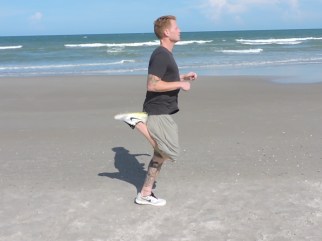
AIR SQUATS:
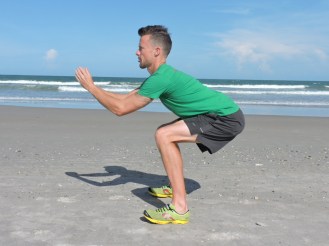
In preparation for any activity a smart move would be to increase blood flow to the region being utilized.  We’re learning that static stretching can actually do the opposite.  However, performing a proper dynamic warm up, including a basic light jog, encourages blood flow, which equals more oxygen and quicker waste removal from the muscles.  It also literally warms up the tissue, many times alleviating that tight feeling which provokes so many of us to stretch in the first place.

So you decide to be proactive and try something different; ditching the static holds and intelligently warming up, yet you still feel stiff, tight and an overall lack of mobility.  So much so that you’re tempted to revert to your old ways and bend over and touch your toes for 30-60 seconds.  Slow down there. We just explained that unless you perform static stretching for an extended time over at least two months, the tissues don’t actually lengthen.  Contrarily this method also diminishes blood flow to the tissue and feedback to the brain.

A better option at this point would be aiming to improve mobility in your tissues.  For various reasons, whether it postural or remnants of an old injury, our tissues lose their full range of motion due to scar tissue or adhesions within the tissue.  When an injury occurs, traumatic or otherwise, eventually your body lays down new tissue in order to repair the damage.  Many times due to various reasons, the tissue does not get laid down in the proper orientation and can lead to a lack of mobility or discomfort within the tissue.

These adhesions or scar tissue can be addressed utilizing soft tissue mobilization techniques.  This includes everything from the foam roller or LAX ball to techniques frequently applied in our office, mainly consisting of deep tissue stripping, Graston and Active Release Therapy (ART) in order to efficiently eliminate these adhesions and restore mobility to the tissue.

It should also be noted that simply applying these techniques to soothe discomfort and restore mobility is only part of the job.  The next stage comes in the form of post mobilization movements.  We like to implement a unique, flowing combination of isometric and eccentric contraction, mixed with PNF stretching to encourage optimal recovery and stability.

The one thing static stretching may indeed supply is a mental benefit, especially if it’s been part of your regimen for years.  At that point it’s more of a habit that many hold on to for dear life, like our toes when performing that awkward hamstring stretch.

However, as new research and information becomes available it should be analyzed and if it makes sense, applied. This holds true for all aspects of health from high intensity interval training to eliminating gluten from your diet.  Even if you are one of the fortunate souls to have skated though an active life unscathed up to this point, if you’ve already made the effort and lifestyle changes to achieve a higher level of health, it would be foolish not implement the latest sound strategies due to habit or sheer stubbornness.

If you’re experiencing stubborn stiffness or tender tightness, or are still suffering residual effects from an injury that should’ve packed its bags and vacated a long time ago, we would be glad to collaborate with you in working towards the common goal of restoring mobility, banishing loitering injuries, and providing you with the tools to enable continued play well into the future.

REFERENCES

Page P. CURRENT CONCEPTS IN MUSCLE STRETCHING FOR EXERCISE AND REHABILITATION. International Journal of Sports Physical Therapy. 2012;7(1):109-119.

Wilson JM, Hornbuckle LM, Kim JS, et al. Effects of static stretching on energy cost and running endurance performance. J Strength Cond Res. Sep 2010;24(9):2274–2279

Nelson AG, Kokkonen J, Arnall DA. Acute muscle stretching inhibits muscle strength endurance performance. J Strength Cond Res. May 2005;19(2):338–343

Behm, D. G., Bambury, A., Cahill, F., Power, K. Effect of Acute Static Stretching on Force, Balance, Reaction Time, and Movement Time. Medicine & Science in Sports & Exercise 2004, 36, 8, 1397–1402.

Comana Fabio. “Debunkning Fitness Myths: Stretching” American Counsil on Exercise 2011, http://www.acefitness.org/blog/1575/debunking-fitness-myths-stretching


 

Hormonal? Fertility Issues? Have You Addressed the Adrenals?

Being a practitioner that places a heavy amount of emphasis on nutrition, I’d be remiss if I didn’t continue to elaborate on the far reaching hands of the adrenal glands.  Being a beaming new father who has been blessed with a beautiful and healthy wife and baby, I’d also be remiss if I didn’t go into more detail about how adrenal dysfunction can influence the sex hormones responsible for reproduction and beyond.  Well, nobody wants to be labeled as remiss, so here we go.

In the simplest terms, the adrenal glands are our stress glands.

(For a review on these essential workhorses feel free to refresh: https://clarkechiropracticwellness.com/2013/03/12/de-stress-your-life-part-1/

and

https://clarkechiropracticwellness.com/2013/03/19/de-stress-your-life-part-2/ .)

When they are overworked for any of a variety of reasons (mental or physical stress, food intolerances, etc.) they shift towards an overproduction of cortisol in order to help us deal with stress.  One of the many downsides to this is that the production of hormones like estrogen, progesterone and testosterone decreases.

In order for the adrenal glands to make cortisol in response to sustained levels of elevated stress, it ends up stealing the cholesterol precursor that would normally be used to make something called DHEA, which is the precursor to our sex hormones.  This is a phenomenon called pregnenolone steal and can result in hormonal imbalances, PMS, infertility, male menopause, and polycystic ovarian syndrome.

Your hormone production is also dampened by overactive adrenals on a cerebral level.  As we’ve discussed in the past, the adrenal glands are under control of a part of the brain known as the hypothalamus, which in turn directs the pituitary gland.  The pituitary gland either makes, pumps out or sends the signal to trigger hormones like growth hormone, thyroid stimulating hormone, oxytocin, as well as hormones that signal the adrenals.

The anterior pituitary is also responsible for LH (luteinizing hormone) and thus progesterone, and FSH (follicle stimulating hormone) and thus estrogen.  These hormones are intracle in properly regulating the menstrual cycle, reproduction and beyond.  Adrenal overdrive overworks the pituitary causing it to be sluggish in its output of other hormones, like LH or FSH.

Another fact to be cognizant of is the fact that an inflammatory diet or unknown food intolerances will also have the adrenals logging extra hours at the office.  This not only attenuates hormone production for reasons described above, but it also downgrades the immune system.  This is critical for us all, but especially for a mother and her un or newborn child.

When dealing specifically with pregnancy, studies have shown that a mother with adrenal dysfunction can actually pass it on to her unborn baby by drawing hormones through the umbilical cord.  We’ve illustrated the systemic effects of adrenal dysfunction in the past, so a newborn child with this condition is highly susceptible to immune and gut dysfunction, allergies, eczema, food intolerances, even autism.

The best thing to do if you are having issues that have been deemed or you presume are hormonal is to consult with a qualified healthcare practitioner.  Cleaning up the diet and repairing the gut, identifying potential food intolerances, providing adrenal support if necessary, making lifestyle changes, making sure the nervous system (which ultimately controls ALL) is balanced, and just taking a deeper look inside for the root of the issue is the logical course of action.

If you or anyone you care about is going through any of this, please give us a call (321-848-0987) and we’ll work through it together.

On a personal note, as I prefaced in the intro, my wife and I are proud new parents.  Going into 2013 we didn’t have a time table to begin trying.  However, my wife is a patient of mine and we actually had her on various adrenal support and supplements due to symptoms she was having and the results of an exam.  After that we both partook in a fast/detox/cleanse together, while congruently sticking to an elimination/provocation diet.  A couple of months later we decided to “stop not photo 4trying” to get pregnant.  A month later Ashley was pregnant. And 9 plus months later we have a healthy baby boy.

I realize there are always other factors that contribute to hormonal imbalances and things such as pregnancy.  But don’t rule out these seemingly simple things. Don’t fall victim to the current status quo and believe that “that’s just the way it is,” or you need a pill to fix that. Keep hope alive.  Trust the body and treat it well and most likely it will return the favor.  This goes for the current topic or any other.

Good luck and do not hesitate to call for a consult if any of this resonates with you.

Don’t Just Sit There (Part 2)

In case you missed it, last week’s post incriminated sitting and poor posture as major contributors to not only what is deemed as “normal” pain and systemic dysfunction, but actual shorter life spans.  Not only were these two culprits incriminated but a solid case was made against them with easily graspable explanations.  So now it’s on you.  You have the knowledge.  What are you going to do with it?

As promised, we will now take it one step further and provide some easily implementable strategies for breaking up the sitting and combating the collateral damage that comes with it.

1) Get Up. Stand Up.

This will be the easiest and most intuitive of all the suggestions we bring to the table.  Break up the long periods of uninterrupted sitting by simply standing up.  Obviously the more movement, the better but I realize in many situations, getting up from your chair and busting out some squats isn’t always conducive to your surroundings. Although, it is a good idea… the new “normal,” if you will.

Set an alarm on your phone for every 15-20 minutes that reminds you to stand up for at least 60 seconds.  Take it a step further and incorporate a simple movement like the Bruegger exercise (http://www.youtube.com/watch?v=yxXqVcDam7Y ) in order to reverse some of that anterior muscle tightening and posterior weakening.

2) Breathe Right

Standing up and executing a movement such as the Bruegger exercise will also open your chest up and provide more room for the lungs to expand, drawing more oxygen in.  This brings us to our next suggestion, and that is to be cognizant of your breathing mechanics.  This can be done in the seated or standing position.  The key is to concentrate on breathing with your abdomen or belly breathing.

This is done by utilizing the main muscle designed for breathing, the diaphragm.  This muscle separates your chest cavity from your abdomen and descends on inhalation (creating negative pressure in the chest cavity and drawing oxygen in) and ascends on exhalation (forcing the carbon dioxide out).

When you breathe properly, you allow the muscles of the chest and neck to relax and not be forced to work all day in order to aid in your respiration.  Unlike the diaphragm, these muscles were not designed to work with every breath. When they are forced to do so because of faulty breathing mechanics, it can lead to neck pain, muscle tightness and more of the hunched forward posture we are trying to avoid.

Being that the abdomen is heavily innervated by the parasympathetic nervous system, belly breathing will also enable us to relax and de-stress.  We explained this mechanism thoroughly in a previous post so feel free to brush up if need be.  https://clarkechiropracticwellness.com/2013/07/10/breathe-right/

3) Ergonomics

As you can see, other than physically getting up and breaking up the sitting, we want to make sure we are doing all we can to sit right.  In keeping with the theme, this also was a topic of a past post: https://clarkechiropracticwellness.com/2013/08/21/pain-discomfort-fatigue-your-workspace-could-be-a-culprit/ .  Making sure your workspace is favorably arranged so that it is the least physically stressful should not be overlooked.

Most large businesses will provide an ergonomic evaluation upon request.  I urge you to take advantage of this.  If yours does not or you work from home, I invite you to review the link above, as it provides basic tips to getting you started.  You can also feel free to contact our office (321-848-0987) as we offer full ergonomic evaluations.

4) Deskercise

A buzz word we are seeing thrown around more and more is “deskercise.”  These are exercises to do at your desk for all of you who are moving a little slow this morning.  Patients of Clarke Chiropractic and Wellness are provided with an ongoing, progressive regimen of postural and lifestyle exercises, which includes movements to keep yourself in check while at the desk.

The starter point provided in this post will be to first make sure your ears are lined up directly over the shoulders.  This will begin to reverse that attractive chin jutting.  Once you have this down (and you are naturally breathing correctly) you can begin to implement reverse shoulder rolls.

One at a time, roll your shoulder up, back and down, each time starting the next roll at the point you ended the last one.  Do this three times for each shoulder, constantly being aware that your ears remain over your shoulders.  This will again, open up your chest and engage the mid to lower back muscles as you pinch your shoulder blades together.

5) Mas Agua

Remaining properly hydrated is key to help you sustain optimal health.  This will assist in keeping your joints lubricated and keep your discs (which absorb so much of your seated weight) hydrated.  In addition to providing you an excuse to break up the sitting to refill your water, natural physiology will also kick in and force you to break up the sitting in order to revisit the restroom.  (Unless of course, corporations begin to implement a toilet-chair, which wouldn’t surprise me.)

In addition to these simple and practical suggestions, beginning to execute movements that support proper posture and movement are a must as well.  Virtually all patients we see are prescribed a progressive exercise regimen that concentrates on the core and relearning the harmful faulty movements obtained due to prolonged sitting.

If sitting, standing or any position for that matter causes you pain or discomfort, it is definitely time to listen to your body and address it.  That is where we can intervene to assist you in getting out of pain and on the course to preventing it in the future.

Hopefully this and all posts will at least plant a seed in your mind so you begin to think about these things.  Once the awareness is there, you can begin to take rectifying action.  It’s alright if it’s uncomfortable or feels unnatural at first.  The key is repetition and consistency in creating a new normal.

You have the knowledge and some strategies.  The rest is up to you.

Keep It Moving.

Don’t Just Sit There (Part 1)

The phrase move it or lose it has been around for years and for good for reason.  The concept is contingent upon the process of adaptability or plasticity.  Without moving or utilizing certain processes within our bodies, over time we lose it.  On the flip side, when we utilize certain muscles or nervous system connections known as pathways, we have the ability to strengthen them.

This concept can be simply understood by looking at what happens when you work out or don’t work out a muscle.  If you are constantly doing curls, naturally your bicep will grow as it is your body’s way of adapting to the increased demand.  However, if you don’t use your bicep, another muscle, or various pathways in your brain, the muscle or process will become weakened or atrophied and could quite possibly go away completely.  This is your body’s clever way of adapting.  In our miraculous design, the body is designed to be as efficient as possible. Lack of an activity provides feedback that we don’t need to devote any energy or memory to this process; thus not moving it or using it, leads to losing it.

While the topic of utilizing different, diverse neurological pathways leading to plasticity is a main concept behind Functional Neurology and adjunct therapies like Lumosity, what we are talking about today is literally making sure you move as much as possible.  In particular, we are speaking of trying to avoid long periods of uninterrupted sitting as much as possible.

Mounting research has implicated extended periods of uninterrupted sitting as a major determent to your health.  We are not just talking about a culprit behind back pain, neck pain and headache.  We are not just referring to it being a contributing factor to various diseases or conditions like osteoarthritis, diabetes, and obesity.  The eye opener here should be the fact that research has shown that regardless of your fitness level, individuals who spend their days logging long hours of uninterrupted sitting actually have SHORTER LIFE SPANS.

I don’t know about you but that’s all I need to hear to perk up and pay attention.  Being someone who has always been active and involved in some level of daily fitness or sport activity, it is quite alarming (yet logical) to hear that even if you do get a good workout in multiple times per week, if you’re logging long hours at a desk without moving, you may just meet your maker sooner than expected.

I say logical because when you think about it, it does make sense that what we do the majority of our day (sitting) would have more of an impact that what we do a fraction of the day (a workout).  Studies out of NASA on the determents of microgravity situations that the astronauts find themselves in when they travel to space found the most comparable Earth situation to be sitting.

From a biomechanical perspective, there are a variety of reasons this position is bad news.  Your anterior muscles become shorted.  There are muscles in your lower half that connect to your spine and anchor to your pelvis or hip.  From prolonged, uninterrupted sitting these muscles eventually begin to shorten due to the flexed forward position.  Now when you stand up these muscles can pull down on your lumbar spine, creating the sensation of back pain and the misconception that standing up is the problem.  While standing up does actually cause the individual discomfort, it is actually due to the prolonged sitting and subsequent shortened muscles that the dysfunction and manifestation of pain as a symptom occurs.  This is a prime example of what we talked about in the previous post of going beyond addressing the pain or symptom and fixing the breakdown that led to this symptom in the first place.

If we move up the spine and throw in the fact that prolonged sitting is usually taking place at a desk or car, we begin to flex forward in the upper portion of your body as well.  This shortens the muscles of your anterior shoulder and chest and gives you that hunched forward, kyphotic thoracic spine, and anterior head carriage.  The muscles on the posterior side now become over worked as they must fight even harder to hold you upright.  This leads to that mysterious shoulder and neck pain that you experience after a long day at work.

Lengthening, overworking and weakening the posterior side muscles from uninterrupted sitting and poor posture leads to the breakdown in function that we touched on in last week’s post that so often leads to back pain and other dysfunction.  It is these posterior chain muscles (think low back muscles, glutes, hamstrings, calves, etc.) that are designed to keep us upright and moving smoothly, efficiently and pain free through space.  When the front side muscles become shortened and the back side muscles become lengthened and weakened we begin to not only assume poor posture but a faulty movement pattern that predisposes us to other injuries at proximal and distal locations throughout the body.

Actual sitting is also the worst position for your lower back.  This makes sense too if you think about it.  When we stand, our body weight is distributed through our spine and pelvis to the lower extremity where we have numerous muscles designed to assist in this matter.  When we sit we have removed everything from the upper portion of the pelvis down as far as support goes.   Now our low backs must support the entire weight of the upper half of our body.  This load is heavily placed upon the discs in between the individual vertebrae of our spine leaving them dehydrated and compressed. It is a major reason behind the widespread and seemingly “normal” degenerative disc disease and osteoarthritis seen in our heavily seated culture, but not in others.

Another pitfall of the effects of prolonged sitting is that due to the flexed forward, anterior posture assumed, you actually close down the space available for your organs to function correctly.   Full chest expansion (and thus filling capacity of the lungs) is impeded and you are no longer able to take in as much oxygen.  This leads to widespread systemic consequence because as we know, virtually all function within the body requires oxygen.  Organs within the abdomen can become compressed and deprived of optimal blood flow leading to dysfunction within the liver, digestive tract, reproductive organs, etc.

Hopefully all of these reasons are enough to spark some interest in learning what you can proactively do to make sure you are not included in the “normal” range of society.  It is currently estimated that some 80% of the population will, at some time or another, suffer chronic low back pain.  This widespread prevalence does not exist in other countries that are not sitting all day, every day.  This should tell us something.   I don’t know about you, but if “normal” is having an 80% chance of low back pain, I want no part of it.  I also don’t want any part of the other issues sited in the previous paragraphs.

Stay tuned for our next post which will illuminate some simple steps you can begin to implement as far as breaking up the sitting and doing what you can to avoid these seemingly “normal” issues.

Have a great weekend.