Category Archives: Supplements

Supplement Series: The Good Fats

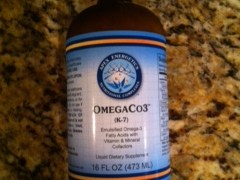
O33

ESSENTIAL SUPPLEMENT OF THE MONTH

OMEGA 3 FATTY ACIDS (aka Fish Oil)

  • Literally thousands of studies have demonstrated that a deficiency in Omega 3s can contribute to:
    • DEPRESSION
    • MEMORY and CONCENTRATION PROBLEM
    • HEIGHTENED RISK OF ALZHEIMER’s:
    • Our brains are 60% fat, and require an adequate source of the Omega 3 fatty acids: DHA in order to function properly.
    • WEIGHT GAIN
    • CANCER
    • HEART DISEASE
    • ALLERGIES
    • ARTHRITIS
    • DIABETES
    • INFLAMMATION (pain, swelling, etc.)
    • ATHEROSCLEROSIS and BLOOD CLOTS

Ideal to have 1:1 ratio of Omega 3: Omega 6 for better HEALTH and LONGEVITY.

Unfortunately due to our lifestyles and dietary choices, the ratio favors Omega 6s, which tilts the scale in favor of a PRO-INFLAMMATORY environment and all of the conditions listed above.

Food sources of Omega 3s are inferior due to toxic accumulations in wild fish, the pro-inflammatory Omega 6 rich diet fed to farmed fish, and the additional step required to convert the ALA found in plants (flax, chia, hemp, etc.) to the desired Omega 3s (EPA and DHA).

That’s why REGULAR SUPPLEMENTATION with a good source of OMEGA 3 FATTY ACIDs is imperative to HEALTH, WELLNESS and LONGEVITY.   

At Clarke Chiropractic and Wellness we encourage all to obtain our nutrients from whole food sources.  However, we also recognize a few supplements that appear to be so beneficial that supplementation may be advantageous.

We carry and recommend that most patients regularly supplement with Omega 3 Fatty Acids.  However, this is always based on the patient’s individual condition and health status.  You should never start or stop any supplements and/or medications without consulting with your trusted healthcare professional first.

If you are interested in confirming whether or not you are a candidate for some Omega 3s or any type of supplements in your life, feel free to give us a call (321-848-0987) and we’ll sift through what you need and don’t need.

Live Life.

QUICK TIP: ADD TURMERIC

It was my original intent when I started these weekly posts to mix in a larger volume of these “Quick Tips.” While every post contains tips, due to my enthusiasm and the complexity of the topics involved, the “quick” aspect has seemed to fall by the wayside. I start with good intentions, but the next thing you know I’m blazing past the 1500 word mark (and with the inclusion of this introduction, appear to be on track to doing it again here.)

We tried this before with Vitamin D, but again, it’s a complex subject if you want to know why to do something and not just take my word for it. (Although I do appreciate the vote of confidence.) Well here goes attempt number two at a truly “quick tip” that you can research, share with others and hopefully implement into your own life.

Today we are talking about the powdered, yellow, curry spice known as turmeric. More specifically we are focusing on curcumin, which is the major constituent of the spice turmeric and the part that allegedly possesses anti-aging, anti-oxidant, anti-inflammatory, even anti-tumor properties. Tumeric, a spice native to southeast Asia and derived from a root similar to ginger, has long been utilized in ancient and alternative medicine. As the combination of research and positive personal experiences grows, turmeric gains more and more clout as a legitimate natural remedy for a plethora of issues.

Much of the resistance to turmeric’s acceptance is due to the fact that a large portion of research that has been done with the spice has been done on animals. While the studies do demonstrate some amazing outcomes, there is understandable uncertainty about its potential on us humans. The other obvious angle of resistance comes from those who have the market cornered with their chemically synthesized pills and therefore face an astronomical threat to their bottom line if natural remedies like this continue to gain momentum.

But alas, we’re not here to talk conspiracies, at least not in a “quick” post that is quickly coasting toward 500 words. So let’s look at a couple of proposed mechanisms of how turmeric can benefit you.

In our bodies there exists a protein called glutathione. Glutathione is the major intracellular anti-oxidant in our body. This means it protects all of the tissues in our body from the potential hazards that come about as a bi-product of our cells functioning throughout the day. Without it tissue damage occurs, function changes or declines, an inflammatory state begins to flourish, and as we know, inflammation is the culprit behind countless pathologies. The point is glutathione is very important. Curcumin (extracted from turmeric) has been shown to lessen the depletion of Glutathione due to the inevitable oxidative stress.

This becomes even more important when we are exposed to environmental toxins, as we all are (some more than others) on a daily basis. So now, in addition to the by-products of normal function that glutathione must breakdown, it now must deal with toxins from the outside world. This leads to a ramped up depletion of our glutathione levels and tissue destruction. Wouldn’t it be beneficial to attenuate this depletion as much as possible? We’re talking about protection to any and all cells of your body, including your brain, liver and heart cells.

When speaking of the brain specifically, mounting research suggests that the curcumin contained in turmeric can lessen cognitive decline, which is the main feature of dementia and Alzheimer’s disease. Research reported as far back as 2008 found that curcumin significantly reduced the presence of the beta-amyloid plaques that are a hallmark of Alzheimer’s disease. It is because of this that turmeric is being touted as neuroprotective.

Another key mechanism by which turmeric can prove advantageous is in helping regulate our immune systems. Without getting into too much detail, turmeric can help to dampen the response of NF-kB and TH-17 cells, both of which, when activated and left unregulated can contribute to auto-immunity. Now we are talking about your Hashimoto’s (hypothyroidism), rheumatoid arthritis, multiple sclerosis, etc.

In addition to auto-immunity and inflammation, promising laboratory research has demonstrated curcumin’s ability to reduce a protein in cells known as MDM2, which is associated with the formation of malignant tumors. Researchers are optimistic as to curcumin’s potential when it comes to pancreatic, breast, colon, and prostate cancer.

An interesting correlation to note here is that the incidence of prostate cancer in India is amongst the lowest in the world (ten times less than that of the United States). Interestingly, consistent intake of turmeric by Indian men in the form of curry, is amongst the highest in the world.

With all the upside and the body of active research growing and growing, a simple addition of this spice to your cabinet appears to be a solid step in the right direction. If someone has specific issues like heightened inflammation or auto-immunity, higher doses can be obtained through supplementation under specific direction of your healthcare professional. However, a proactive step would be to swipe out the salt for some turmeric. Conveniently you can keep the black pepper as it assists in your body’s absorption of the turmeric. I have personally incorporated turmeric as my standard seasoning for chicken, turkey and the occasional grass fed beef. The key here is to do your best to remain proactive. It’s a whole lot easier to constantly check and tighten the wheels, rather than frantically and desperately react to them when they fall off.

On a somber note, thoughts and prayers to the athletes, their families, and all others affected by the recent act of terrorism in Boston. And to everyone else, keep your eyes open and be safe out there, but keep livin’. Carpe Diem, because you truly never know.

REFERENCES

http://www.ncbi.nlm.nih.gov/pubmed/23555802

http://www.ncbi.nlm.nih.gov/pubmed/23548636

http://www.pnas.org/content/104/31/12849.abstract

Bioorganic and Medicinal Chemistry Letters. 2010 April 1; 18 (7): 2631-2638.

http://www.lef.org/magazine/mag2007/oct2007_report_curcumin_02.htm

Quick Tip: Vitamin D

After the last post I decided to turn it down a notch with this one and start to give you simple ways to improve your health. My goal with these posts will not only be to provide suggestions, but to provide a brief explanation of how and why. So often, and especially in the field of health and wellness, we hear people say to do this because it is good for you. Or don’t do that because it is detrimental to your health. I don’t know about you, but I’ve become the type of person that is constantly asking, “Why?” These posts are intended to not only give you a reason to implement changes, but to hopefully jump start your own curiosity and investigation. Taking things at face value or having blind faith in the ideas of the masses could leave you in a horrible health predicament. It’s never too early to start taking personal responsibility for your own health and wellness, but you do want to make sure you wake up before it is too late.

We will start off with some information about a vitamin that the majority of Americans are deficient in. It is a vitamin that is continually getting more credit as more and more research piles in implicating it’s potential benefits. The greatest part is that you can get this vitamin by simply being outside in the sun. I am of course talking about Vitamin D.

Vitamin D is actually derived from cholesterol when the skin is exposed to the suns UVB rays. (You see, cholesterol isn’t necessarily bad, in fact it is vital for life, but that’s another topic for a future post.) The conversion pathway is a multi-step process involving the liver and the kidneys before the biologically active form of D is deposited in the blood and ready to be utilized. In fact, due to the multiple conversions that D must undergo before it is able to be utilized it is actually considered a hormone.

In order to “absorb” your D from the sun, it must come from the UVB rays. Unfortunately these are the rays that the ozone, in all its goodness and wisdom, is designed to block. Penetration of these rays is highly dependent on the angle of the sun to the earth. The optimal time to access these rays is usually in the spring through the fall and between 10am and 3pm. Another determining factor in the availability of these D producing rays is the latitude at which you at located. As you start to head north (and into higher latitudes) your availability of D from the sun decreases. Also playing a role in the formation of D is the pigmentation of your skin. The darker the skin the harder, the more melanin. Melanin acts the same as your SPF sunscreens and essentially blocks the UVB rays, thus blocking the formation of D.

The amount of time spent in the sun to absorb adequate amounts of UVB rays and maintain healthy D levels varies depending on your skin type and location. However, the object here is not to burn, as we know that can damage the skin. We are talking about exposing your skin (and if need be it can be simply your face, hands and arms) to the sun 3-4 times per week, between 10am and 3pm for a period of time prior to the start of a burn. This can be anywhere from 15-45 minutes for some of us.

One of the most familiar roles of Vitamin D has to do with its influence on calcium. You see calcium is a highly necessary mineral whose levels in our blood must be maintained within a narrow range in order for a body’s systems to function properly. Vitamin D increases the intestines ability to absorb calcium, thus keeping your blood levels in the proper range and sparing your body the task of having to leach the calcium from your bones, leading to the start of bone demineralization (aka osteoporosis) or even rickets (a bone softening disorder seen in Vitamin D deficient kids). Vitamin D influences the absorption of calcium by binding to specific Vitamin D receptors located on the intestinal wall which then opens the doors for calcium to enter the bloodstream. It is the discovery of these Vitamin D receptors all throughout the body that has led to more research and subsequent success with Vitamin D therapy.

Amongst others places, Vitamin D receptors have been discovered on the brain and D is thought to play a role in preventing neuro-toxicity, that is poisoning and death of your brain cells. “Vitamin D insufficiency and deficiency was associated with dementia, Alzheimer’s disease, stroke and cerebrovascular disease” (Neurology. 2010 Jan5;74(1):18-26. Epub 2009 Nov) According to multiple sources D has been implicated in improving symptoms of depression, cognitive decline and other mental disorders (Issues of Mental Health Nurse. 2010 Jun; 31 (6):385-93.) Much of the recent research behind Multiple Sclerosis has been focused on Vitamin D and how it has been shown to be preventative, immunoregulatory, reduce risk of relapse, and be anti-inflammatory (Lancet Neurology. 2010 Jun;9(6): 599-612). These receptors are also seen in the blood vessels and the heart leading to “evidence from studies and clinical trials suggesting an association between Vitamin D concentrations and blood pressure and risk for cardiovascular disease related deaths” (American Journal of Geriatric Pharmacotherapy. 2010 Feb; 8(1): 4-33.)

Multiple sources have implicated proper Vitamin D levels as being a major contributor to that healthy immune system. An interesting correlation comes with what we call the “flu-season.” In the United States this is generally considered the colder months, roughly November through March. Coincidentally these are also the months when it is colder and people tend to be inside and get less exposure from the sun (and thus less Vitamin D). Another coincidence, even if you are lucky enough to catch some rays during these months, the axis of the earth’s rotation is different during these winter months and a different angle is formed with the sun that actually is less conducive to UVB penetration. Translation: even less potential to form Vitamin D. Interesting that flu season occurs when an already Vitamin D deficient population becomes even more deficient. Something to think about.

In case you needed a couple of more reasons to take a liking to this Vitamin D that I speak of, studies have also been done showing success in treating forms of pain, low back and elsewhere (Spine. 2003 Jan 15;28(2):177-9). Vitamin D has also been linked to skeletal muscle weakness and instability. Clinical trials have been performed that illustrated better stamina and balance (and less falls) in the elderly when supplemented with Vitamin D. One more parting gift is the fact that Vitamin D is recognized as one of the most potent hormones to keep cellular growth in check. What does out of control cell growth have the potential to lead to in your body? The dreaded cancer. It is for this reason that Vitamin D deficiency has been associated with an increased risk for developing multiple forms of cancer.

This is quite the impressive list of potential benefits, and even more so, possible side effects to D deficiency. None of this is meant to say that Vitamin D is a stand-alone, cure all, wonder drug. Adequate Vitamin D levels are just another piece of the puzzle that should be acknowledged and addressed when taking a holistic approach. The key here is to keep your levels up to par so they don’t have the opportunity to contribute to a health issue. This is the case with Vitamin D and all other aspects of your lifestyle in order to truly make the transition from reactive sick care to proactive health and wellness.

If you are curious about your levels, you can consult your physician about having your levels tested, or go to lab and have them tested on your own. Depending on the source, recommended serum levels can range anywhere from 35-60 g/dL. If you feel that you aren’t fortunate enough to be getting the best form of D in natural exposure to the sun there are supplement options. I bypass foods and go straight to supplementation due to the fact that most foods with the exception of some fortified dairy will not provide you with anywhere near the necessary levels of D. And I am certainly not going to recommend dairy to anyone (again, another topic for another post, stay thirsty my friends).

Personally, when I can’t utilize the Florida sunshine, I use an emulsified form of D that comes in drops, each providing roughly 2,000 iu per drop. Again, it depends on the source, but I’ve read that the average human utilizes anywhere from 1,000-4,000 iu per day. I’ve also seen daily recommendations as high as 10,000 iu per day when sun exposure is not possible.

As with any lifestyle change (diet, supplementation, exercise, etc.) you should consult with your physician, do some research on your own, and check for any known interactions and possible side effects before starting. Feel free to contact me with any questions, comments or suggestions.