
Tag Archives: Alzheimer’s

Obamacare: How to Soften the Blow

Are you one of the millions of Americans who are feeling negatively affected by the ever evolving heathcare reform? Elevated premiums, ridiculous deductibles, limited network provider selection has patients and providers sick to their stomachs (pun intended).

As promised, change did indeed come, and was definitely needed. And while an abrupt upheaval and reconfigurment of an intact system can be quite unsettling on numerous fronts, only time will tell how the future chapters of this book will be ascribed; for better or for worse.

The question we are left with is: now what? How is one to advantageously navigate this new system in order to reap optimal available benefits, while mitigating the economic blow as much as possible?

Like it or not, it is what it is for the time being. And alas, we are left choices. There is always the option to whine, complain, bitch, moan; even get angry and stressed, which will make healthcare all the more necessary for you.

Unless you plan on getting involved in politics and joining the ranks of policy proposers and lewd lobbyists, then the aforementioned option doesn’t do anyone any good.

Let’s talk about an intelligent strategy here to hopefully save some dollars, sanity and ultimately, your health.

First off you will either need to continue to carry a now inflated health insurance or pay a fine for rolling the dice without. This is still an option and the appropriate alternative varies dependent upon your specific situation. This part appears to be an unavoidable reality at the moment so unless you plan on joining the circus in D.C., you may as well come to terms with your decision and move on.

Let’s now talk about how you can really take control of the situation. Are you infuriated by your seemingly unattainable deductible? Are you disgruntled because you feel you have been forced to change physicians or pay them thousands to join their preferred, VIP patient club?

Well, a simple solution exists to eliminating both of these issues. Stop sitting back complaining while you consume the same diet that perpetuates the need for frequent doctor visits in the first place. Stop sitting altogether. Stop talking about exercise or becoming more active, and get up and do it.

The information, research and evidence implicating lifestyle (diet, exercise, stress, sleep, toxins, etc.) as the main driver of genetic expression (epigenetics) and thus chronic disease (diabetes, arthritis, heart disease, auto-immunity, Alzheimer’s, cancer, etc.) now exists, and is thankfully becoming more mainstream. Ignorance is no longer an excuse. The information, and thus the knowledge and power exists to play a more active role in your health, well being and life than ever once imagined.

You see if you don’t like the current sickcare, excuse me, healthcare system, then take a stand on a personal level and remove yourself from it as much as possible. Stop playing the loud, opinionated, helpless victim who does nothing to help themselves.

No matter where you sit on the spectrum of health, there are basic foundational changes that can be implemented and built upon from there. The stronger that intelligently constructed foundation, the less of a need for all those prescriptions and visits to the specialist.

Thus you have improved two aspects of your relationship with healthcare in that you can now pick a plan that makes emergencies more economical, rather than routine visits to attenuate this new symptom and modify dosage of that med. You have also now enabled yourself to take some space from the this new provider who you didn’t much care for to begin with.

Now I realize everyone’s situation is different, especially when it comes to health. Some people may need plans for frequent specialist visits and access to medications, and that’s all good.  That’s what they’re there for.

However, the majority of the population can do themselves a service and make the effort to take the proactive step towards optimal health, and thus more independence from the system they declaratively loathe.

The seemingly healthy individual can arm themselves with knowledge and begin to cultivate a lifestyle relatively free of issues down the line; true responsible, wellness care.  The boomers and elder set can break some of the lifelong habits and be sure to attentuate the inevitable degeneration as much as possible, leading to a higher quality of life in those golden years.  Even the individual with seemingly hopeless, devestating disease diagnosis can explore all options, and do all they can to stack the remainig deck in their favor.

With the abundance of information out there, getting started can be a daunting, seemingly insurmountable task, but it doesn’t have to be. There exists forward thinking healthcare providers like myself, who are passionate about collaborating with individuals in order to unlock the potential to thrive.

Find one you can develop a relationship with, along with some level of trust. Find one who will take the time to not only listen, but explain the anatomy, physiology, and logic and reason behind each aspect of a plan; ultimately creating a more knowledgable, independent advocate of their own health.

This is what we pride ourselves in doing professionally and personally, and are here to guide all those looking to take their lives into their own hands.
Cholesterol: Rethinking Statins

As of the spring of 2014 one in four Americans over 45 were taking a cholesterol lowering drug known as a statin.  Over 43 million Americans between the ages of 40-75, along with an increasing number of younger customers are now including a Lipitor or Crestor as part of their daily regimen.

As the lab values that serve as the criteria for prescribing a statin continue to change, the umbrella for those deemed in need of statin therapy continues to widen.  Leaning on the outdated and now uneducated vilification of fats and cholesterol, the multibillion dollar statin industry continues to thrive.  Sad thing is, cardiovascular disease and overall health have not improved despite the low fat, statin fueled culture we know find ourselves in.

So is this widening spread use of statins necessary?  Is it safe?  Here are some facts about statins and cholesterol that should at the very least provoke some individual concern and subsequent investigation.

In 2012 the FDA issued a statement declaring statin drugs can cause cognitive side effects such as memory lapses and confusion.

An AMA (American Medical Association) study published in the Archives of Internal Medicine demonstrated a 48% increased risk of diabetes (a powerful risk factor for type III diabetes aka Alzheimer’s) among women taken statins.

It is well known that statins paralyze cells’ ability to make coenzyme Q10, a vitamin like substance found throughout the body, where it serves as an antioxidant and energy producer.  Depletion of CoQ10 leads to fatigue, shortness of breath, mobility & balance problems, muscular pain & weakness. CoQ10 deficiency has also been linked to heart failure, hypertension & Parkinson’s.  CoQ10 has actually been proposed as a treatment for Alzheimer’s.  At the absolute very least, individuals currently undergoing statin therapy should consult with their physician about adding CoQ10 to their regimen.

How about Vitamin D deficiency? Vitamin D is derived from cholesterol in the skin. When statins lower cholesterol, the ability to generate Vitamin D is hampered leading to (amongst other things)  a heightened risk for diabetes, depression, cardiovascular disease and ultimately dementia and other neurodegenerative diseases.

Consider the fact that our sex hormones are also derived from cholesterol.  Lowering cholesterol through use of statins and diet can lead to lower testosterone levels and subsequent decreased libido and ED (erectile dysfunction) which are common complaints amongst statin users.

LOWER levels of cholesterol have been linked to depression, dementia and even earlier death.

This type of information and suffering will hopefully continue to provoke reconsideration and remodeling of the current paradigm.  As we learn more through research and prior failures, the appropriate response is to act on this newfound knowledge and improve.  Unfortunately pride and profits appear to be standing in the way, so it is on us as individuals to educate and investigate when it comes to our health.

When it comes to evaluating cholesterol levels, they are usually included in a lipid panel. This entire process should be reevaluated as well, but there are ways to alter and more accurately measure your triglyceride and small LDL.  Before resorting to a statin, why not attempt to uncover the reason for the unfavorable levels, and attempt to remedy it?

How about starting with rethinking the dietary approach?

No not the seemingly logical, oversimplified and outdated, disproven theory that dietary fats and cholesterol are the main culprits behind “bad” cholesterol and cardiovascular disease.

You must once again look to carbohydrates and the subsequent release of insulin, which triggers fatty acid synthesis in the liver.  This starts the chain that eventually leads to the rise of triglycerides and “bad” cholesterol.  It is no coincidence that diabetes (a disease which features erratic blood sugar and insulin levels) is associated with the lipid triad of low HDL or “good” cholesterol, and high triglycerides and small LDL or “bad” cholesterol.

(Calling HDL and LDL cholesterol is actually incorrect as the “L” actually stands for Lipoprotein, and the “HD” and “LD” stand for High or Low Density.  These are carrier proteins that transport cholesterol throughout the body.)

The majority of type II diabetes can be reversed by reducing carb consumption, and the same holds true for naturally improving your lipid panel.

Another area to look at is thyroid function.

Patients with hypothyroid symptoms often display a lipid panel that includes high triglycerides and high LDL due to the body making fat much quicker than it can burn it.  The slower metabolism seen with hypothyroidism leads to:

…a sluggish liver and gall bladder making fat less likely to be metabolized and cleared from the body.

…it causes cells to be less receptive to LDL circulating which sets the stage for the LDL to accumulate and be oxidized.  This is actually when LDL becomes harmful, not merely its presence alone as it is actually necessary to deliver vital cholesterol to our body’s tissues.

…leaves an individual less able to burn fat as fuel as a healthy person would.  This creates a reliance on glucose (carbs/sugar) for fuel and the subsequent insulin release, fat storage and higher triglycerides and small LDL.

Diet and hampered thyroid function are just two possible reasons for an unfavorable lipid profile, and in many cases can be improved with lifestyle changes and the application of functional medicine.  Depending on the individual, cleaning up the menu, fortifying the digestive system, balancing the immune system, supporting the adrenal and thyroid glands and detoxification pathways can all be used to improve underlying function, which in turn creates a healthier human who can hopefully steer clear of statins and the accompanying baggage.

As always, consult with your healthcare provider before making any changes.  If you are interested in a unique, knowledgable approach based on the most current research, experience and understanding of the underlying function of the body and would like to learn more, call us today.

Awareness Starts with Prevention

October is here again and with it comes an increase in pink donned by everyone from your next door neighbor to the players on the field each weekend.  This yearly tradition signifies breast cancer awareness month which emphasizes the importance of early detection and potentially life saving subsequent treatment.

But what if we took it a step further?

What if instead of simply looking to detect and treat, we placed the overwhelming emphasis on doing all we can to prevent it in the first place?

According to the WHO (World Health Organization), approximately half of all cancers are preventable if certain strategies are implemented (i.e. diet and exercise).  If this is accurate, we are talking about millions of cases of cancer prevented, ultimately leading to a decrease in death, suffering and expensive cancer treatments.

Yet for some reason the act of prevention through education and lifestyle modifications continues not to be the main focus.  Rather the detection of an already existing, potentially deadly disease. This train of thought which holds true for cancer, Alzheimer’s, and the current mainstream medical model can best be summed up in a 2,000 year old quote:

“Maintaining order rather than correcting disorder is the ultimate principle of wisdom. To cure a disease after it has manifest is like digging a well when one feels thirsty, or forging a weapon when the war has already begun.”

This is not to say that some of us may be more genetically predisposed to one condition or the other. Certain diseases do appear to be an ugly ornament upon the branches of many family trees.  However, as the field of genetics continues to lose more and more steam in implicating inherited genes as the decisive factor in the expression and development of disease, the research and focus is slowly diverting to lifestyle and environmental influences as that decisive factor.

I am once again speaking of epigenetics.  If you’ve read any past posts you know this is a reoccurring theme, and for good reason.  Mounting research (including the afore cited WHO proclamation) points to environmental influences as being the determinant of whether or not certain genes are expressed, turned on, or altered, thereby leading to disease.

This type of information can prompt a wide range of emotions and reaction.  If increasing research continues to point towards this being true, then the notion of being a helpless victim of your genetics goes out the window.  Also out the window goes a care free, over indulgent and indiscretion filled lifestyle.

In comes the notion of personal responsibility and accountability;

the acknowledgement that our daily, routine actions do indeed generate far reaching and severe reactions;

the opportunity to utilize the latest information to your advantage and play an active role in scribing your genetic destiny.

Intelligent decisions bathed in self discipline and respect for life.

Realizing that food truly is thy medicine and beginning to eat to live rather than the other way around; all part of the empowering picture.

One more note pertaining to your role in how your genes are expressed, and ultimately the expression, progression or regression of disease.  It has been noted that at any given time, our genes are expressing 20-40% of their potential. That leaves 60-80% dormant or silent.  With this recognition and subsequent action based upon the fact that environmental and lifestyle factors determine what 20% is expressed, the power lies in your hands.

Will you implement the strategies that foster genetic expression leading to a life health, energy and a zest for life, or will you choose to stay ignorant to, or simply refuse to make changes that current studies implicate have a real and positive effect on the expression of your genes?

So let’s talk specifically about the contemporary topic.  What can we do about breast cancer?  What are some strategies we can implement in order to stack the deck in our favor and keep the genetic expression that leads to cancer quiet?

First off is a change in deodorant, namely ditching the antiperspirant.  Using an antiperspirant that works by clogging the sweat glands leads to a toxic build up of chemicals and metabolic by-products that are intended to be released.  A good place to start is by eliminating deodorants that contain ingredients like aluminum, phthalates, parabens or any color followed by a number as these ingredients have been shown to be potentially carcinogenic as well as powerful endocrine disruptors (which is more serious and far reaching that you may think).

Another area to address is the diet, particularly getting a hold of your blood sugar and insulin.  Varying degrees of insulin resistance are all but commonplace in this country due to carb/sugar heavy meals and over indulging, coupled with a lack of physical activity.  There have been insulin receptors found on tumors which have been shown to facilitate tumor growth.  Thus if we have insulin spikes due to carb/sugar heavy meals or borderline resistance, we now have an abundance of insulin circulating, a portion of which can bind to a tumor and encourage growth.

To take this a step further, cancer cells have been shown to flourish off the broken down component of carbs/sugar: glucose.  One way to get the insulin in check and attempt to starve the cancer out is by incorporating a fat adapted or ketogenic diet.  This means our body switches over to using fat as the primary fuel rather than carbs, which emerging research is showing to not only benefit cancer patients, but actually lead to regeneration of brain cells, potentially preserving mental and cognitive health.

Let me wrap this up by saying that there is no full proof plan. You have your outliers on either side of the equation.  You have the individual who lives life to a tee health wise yet still winds up suffering from a horrible disease. You also have your aunt who smoked a pack a day while drinking a pint of whiskey yet lived into her 90s.

These exceptions to the rule remain somewhat of a mystery, while simultaneously serving as an excuse for others to ignore the power of daily habits and lifestyle choices.  Fueling their fire for no discipline and a hands up, life happens, victim approach.

However, the tide is turning.

The information is available.

The choice is ultimately yours and these choices made on a daily basis will lead to consequences, either good or bad in the future.

I ask again, wouldn’t you want to do all you possibly can to stack the deck in your favor?


Arm Yourself Against Alzheimer’s

It is difficult to fully comprehend the frustration, fright and devastation that accompanies the loss of memory and function.  Unfortunately this is a reality that 50% of 85 year olds in this country face, with a substantial rise in the number of early onset Alzheimer’s patients as well.

The good news is that more and more research is implicating lifestyle as quite possibly THE determining factor as to whether or not the Alzheimer’s gene is expressed and to what degree.  In spite of a sick care system which profits grotesquely off of the individual becoming resigned to the fact that they are a victim of genetics and bad luck, this is truly empowering information.

The following link is to an article from Dr. Mercola’s website.  Occasionally I may pull bits and pieces of information or references from Dr. Mercola, but in this case I felt enlightened and empowered by the entire post, and in turn, enthused to share.

When it comes to Alzheimer’s, the numbers don’t lie.  The threat is real.  Take a second to ponder how sad, lonely, and hopeless life would become as your brain function declines.  Now get it into your head that when it comes to Alzheimer’s and many other diseases or conditions, you do not have to be a helpless victim resigned to drugs, surgeries and inevitable decline.  But the trick is taking a proactive approach NOW, before the wheels fall off and you resort to panic mode.

You are never too old or young to make changes.

The knowledge and thus the opportunity is before you.

What are you going to do with it?


Do yourself a favor and read the following article:

http://articles.mercola.com/sites/articles/archive/2014/04/27/diet-alzheimers-disease.aspx


Supplement Series #2: The Good Bacteria

probiotic211

ESSENTIAL SUPPLEMENT OF THE MONTH

PROBIOTICS

  • WHAT ARE THEY?
  • The beneficial or “good” bacteria that reside in your digestive tract.
  • 80% of your IMMUNE SYSTEM lives in your gut, and a large portion of this is due to the presence of this bacteria.
  • WHY?
  • They aid in digesting food, particularly hard-to-digest foods and foods to which some individuals are more sensitive.
  • Without proper digestion we are not receiving the nutrients and fuel that we are consuming the food for. Vitamin and mineral deficiencies lead to systemic repercussions.
  • Support your immune system
  • The “gut” is one of the four main barrier systems in your body to protect you from outside invaders whose presence can lead to things conditions like AUTOIMMUNE DISEASES.
  • Mounting research pointing towards a strong relationship between your gut health and brain health. Inflammation or permeability (aka “leaky gut”) in the gut has been shown to lead to the same in the brain.
  • This is why there is a growing correlation between gut health and conditions like DEPRESSION and ALZHEIMER’s
  • Promotes vaginal health in women
  • (the same “good” bacteria that populate the gut also populate the vaginal region)
  • Antibiotics, drinking or swimming in chlorinated water, chronic blood sugar spikes, consuming inorganic, GMO and processed foods all wage a war in your healthy gut flora (aka probiotics)


  • FOOD SOURCES:
  • Fermented (UNPASTURIZED FOODS: sauerkraut, kimchi, various UNPASTURIZED dairy)

As we’ve stated in the past, it would be ideal to keep the number of supplements to a minimum while obtaining all the externally derived nutritional support from our diet.  However, due to poor quality of our food source as well as the hazards we are exposed to, certain supplements would be advantageous to our wellbeing.  A couple of months ago we started this list with a daily dose of high quality Omega 3 fatty acids.  (https://clarkechiropracticwellness.com/2014/03/12/supplement-series-the-good-fats/)

The second supplement that virtually everyone can benefit from is a high quality probiotic.  This term has become somewhat of a buzz word in the mainstream as more and more research emerges backing the benefits behind making sure your “good” bacteria is at a premium.

As with all supplements, you want to make sure you’re spending your money and efforts on a quality product.  Certain strains of bacteria are more likely to survive the stomach acid bath en route to your intestines, so you want to make sure those are included on the label.

You also want to be wary of certain foods (yogurts are notorious for this) that falsely tout the added benefit of various live cultures or strains of bacteria.  If a product is pasteurized, which most dairy is, the beneficial bacteria which they use as a selling point have most likely been destroyed by the heating process.  Unpasteurized is becoming a selling point like organic or gluten free so if it doesn’t make mention of it, assume it’s pasteurized.

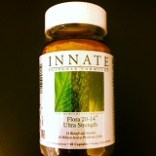
In addition to the immune and digestive benefits (which should not be understated) the gut – brain connection is a major reason why a good probiotic makes my list of essentials.  We carry and take the brand pictured at Clarke Chiropractic and Wellness.  However, if you have questions about another brand or supplement, your inquiries are always welcome.