Tag Archives: Alzheimer’s

Supplement Series: The Good Fats

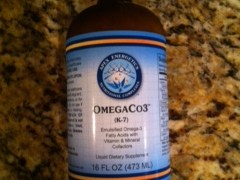
O33

ESSENTIAL SUPPLEMENT OF THE MONTH

OMEGA 3 FATTY ACIDS (aka Fish Oil)

  • Literally thousands of studies have demonstrated that a deficiency in Omega 3s can contribute to:
    • DEPRESSION
    • MEMORY and CONCENTRATION PROBLEM
    • HEIGHTENED RISK OF ALZHEIMER’s:
    • Our brains are 60% fat, and require an adequate source of the Omega 3 fatty acids: DHA in order to function properly.
    • WEIGHT GAIN
    • CANCER
    • HEART DISEASE
    • ALLERGIES
    • ARTHRITIS
    • DIABETES
    • INFLAMMATION (pain, swelling, etc.)
    • ATHEROSCLEROSIS and BLOOD CLOTS

Ideal to have 1:1 ratio of Omega 3: Omega 6 for better HEALTH and LONGEVITY.

Unfortunately due to our lifestyles and dietary choices, the ratio favors Omega 6s, which tilts the scale in favor of a PRO-INFLAMMATORY environment and all of the conditions listed above.

Food sources of Omega 3s are inferior due to toxic accumulations in wild fish, the pro-inflammatory Omega 6 rich diet fed to farmed fish, and the additional step required to convert the ALA found in plants (flax, chia, hemp, etc.) to the desired Omega 3s (EPA and DHA).

That’s why REGULAR SUPPLEMENTATION with a good source of OMEGA 3 FATTY ACIDs is imperative to HEALTH, WELLNESS and LONGEVITY.   

At Clarke Chiropractic and Wellness we encourage all to obtain our nutrients from whole food sources.  However, we also recognize a few supplements that appear to be so beneficial that supplementation may be advantageous.

We carry and recommend that most patients regularly supplement with Omega 3 Fatty Acids.  However, this is always based on the patient’s individual condition and health status.  You should never start or stop any supplements and/or medications without consulting with your trusted healthcare professional first.

If you are interested in confirming whether or not you are a candidate for some Omega 3s or any type of supplements in your life, feel free to give us a call (321-848-0987) and we’ll sift through what you need and don’t need.

Live Life.

Vaccination: A Healthy Dialogue

We’re going to change up the format on this week’s post as I would like to share a recent text conversation I had with a friend.  We are both blessed in that we have little ones on the way, and being such issues like this are quickly catapulted to the forefront on our list of concerns.  I felt like the thoughts and emotions are similar to what many have experienced or are experiencing out there so I hope that this will encourage further dialogue.

X:

“I just wanted to get your thoughts about the flu vaccine.  I’m kind of weary about vaccines in general but her doc and the internet say it’s important. What do you think?”

O:

“Many doctors will say that, and some pediatricians won’t even accept or work with you if you don’t follow the recommended regimen.  You need to find one who’s open to the lack of evidence and opposing statistics; and more importantly, personal choice.”

X:

“I’m focusing on it a lot more now.  It can be so confusing because I am in no way trying to act like I’m a professional or even half that for this type of thing. I honestly would like to leave it up to them to inform me.

But when you think people in this industry are constantly trying to deceive you for a buck, it becomes very scary. Who the hell can you really trust? Just because a doctor says they are for vaccines for this and that reason doesn’t give me a great sense of trust, especially because they are influenced by money (to some degree as well).

I’ve never been a fan of any kind of medicines, drugs, or vaccines. I literally don’t even like taking Tylenol.  But aren’t there two sides to everything? Is the existence of a vaccine primarily due to big business trying to make more money? I’m not saying I’d be surprised if that were so, but are there any real concrete benefits and reasons why we should at least consider administering vaccines?

The internet is chalk full of “good” reasons why. Are the normal, relatively informed public to ignore the consensus of information out there and go at it “on their own?” It just fosters a very paranoid culture that is obviously unfortunate.

And to think, I’m going to trust these people to deliver our most precious thing in the world, but I’m not supposed to trust them to advise me on anything regarding drugs.  Where does the line get drawn?  Am I supposed to become the doctor and tell him what to do or not do? Very confusing my man.”

O:

“I hear you. It’s rough. Ignorance is bliss, until something happens and it’s not. Do you get me?

To your point, how are the doctors who are against vaccination or for choice motivated by money?  Maybe they will get a few patients because they get the reputation as a forward thinking doctor, but they lose out on incentives from the government and inflated bonuses from pharmaceutical companies for administering or prescribing as much as possible.  We can go as deep as you want as far as unethical practices, but the bottom line is there aren’t any long term studies confirming the safety or efficacy of vaccines, in some cases quite the contrary.  Just like with most drugs on the market, we’re the Guinea pigs in this real life experiment.  Personally I trust the human body to protect itself as it was designed to do, if allowed to do so.

I don’t judge or envy anyone else having to make the decision; to each his own.  Obviously everyone does what they do in the best interest of themselves and their family.”

X:

“What do you say to us all raised in a time where forward thinking was probably not as advanced – all probably being administered vaccines at some point, but turning out “ok” nonetheless?

Are we just “lucky?”

O:

“Perhaps. Like I said, there are no long term studies. Who is to say some of that aluminum in the shots that has bioaccumulated in our brains isn’t going to eventually contribute to neurodegenerative diseases like Alzheimer’s?

But I hear you; many are fine from the surface and time being. But what about the other percentage that isn’t and all of the sudden is deemed autistic, has severe digestive issues and allergies from all antibiotics administered in the vaccine and thereafter for every other issue.  I guess the difficult thing about this position is we are now calling the shots for another human who we want the best for.  What if your child is one of those cases that could’ve been prevented? That’s where the issue is.

I’ve seen parents whose child was “fine” prior to a vaccination and then all of the sudden, is symptomatically autistic. I’ve met other couples whose child was vaccinated and provided non-stop anti-biotics for ear infections and now has noticeable digestive issues, allergies and they’re noticing “odd” personality traits.

These people search for “alternative” medicine because for whatever reason, (money, stubbornness, too much pride to admit past error, etc.) traditional medicine dismisses that it could quite possibly be the surplus of vaccines and over medication that could be contributing to, if not causing the problem.  So what’s the mainstream answer? More drugs, which is a whole other conversation.

All I’m saying is it comes down to what you believe, as you can find “research” and “evidence” for either side. I believe that our bodies possess the power to heal and protect ourselves, provided they are presented with the proper nutrition and environment; overall lifestyle to do so.  Contemporarily, we run into issues here because of the abundance of poor choices being made and the body and quality of life subsequently suffering, but again, another topic for another time.  So with vaccines, it’s all about if you want to roll the dice; which can be construed in either direction depending on what you believe.”

Boost Your Health With…Chocolate???

In keeping with the positive, light-hearted spirit of the season, this week’s post serves as a gift.  So often it seems that most healthy recommendations involve cutting out the “good” stuff.  However, some of the traditional “good” stuff can actually be good for you, and that includes almost everyone’s favorite: chocolate.

Now hopefully you didn’t just cut your reading of this article off there and inhale the nearest chocolate bar.  The type of chocolate and accompanying ingredients dictate whether or not its consumption can empower or devour you.  Oh come on, you didn’t think it was going to be that easy.

When we talk about “healthy” chocolate, we are referring to pure, organic dark chocolate.  This type of chocolate is actually quite bitter on its own, which is why if you buy a manufactured dark chocolate product it usually comes to the party with an entourage of sugars, unhealthy artificial sweeteners, soy, etc.

As with any product, you’re going to want to take the time to scan the ingredients and make your decision based upon your knowledge, what’s important to you and what research you believe.  To ensure you reap some of the benefits we are about to go over, you’re going to want to choose a product that lists cacao as the main ingredient.

The cacao tree (aka cocoa tree) is a small tree indigenous to the tropical regions of Central and South America.  Its seeds serve as the source for various forms of cacao such as powder, paste or butter.  All of which can be used to make what we know and love as chocolate.  As with all foods, the less processing before it enters your pie hole, the better.

One of chocolate’s main beneficial properties comes from the presence of a large quantity of antioxidants such as polyphenols and flavonoids.  We throw terms like antioxidants around so much that a brief review will help illustrate the benefits.

While we function throughout the day, millions of cells are constantly performing functions on a microscopic level that enable us to live.  A by-product of this cellular function or oxidation, is what are referred to as free radicals.  Free radicals are a highly reactive chemical species that cause damage to cells throughout the body contributing to everything from  cancer, heart disease, stroke, Alzheimer’s disease, Rheumatoid arthritis, and cataracts (to name a few).   When functioning properly, our bodies are designed to discard harmful free radicals up to a certain point.  However, things such as stress, poor diet, sickness, strenuous exercise, and smoking can lead to a level of free radicals that exceeds our body’s natural capacity to break them down.

If you are alive, it is impossible to avoid the formation of free radicals.  The trick is to limit the formation AND provide your body with added free radical fighters, or anti-oxidants.  Many foods and supplements possess anti-oxidative properties (measured as ORAC), but pure cacao boosts three to ten times the anti-oxidative properties than foods like blueberries or cranberries.

Many of chocolate’s beneficial properties are mainly a consequence of what was just explained.  Reported benefits include:

Improved glucose metabolism/diabetic control

Controlling blood pressure

Improved heart health and overall cardiovascular system

Anti-inflammatory (ah inflammation, the common denominator in almost every pathology)

Relatively high levels of resveratrol which has been shown to be potently neuro-protective and possibly life extending

Recent research has even found that regular consumption of an ounce and a half of dark chocolate a day led to a reduction in stress hormones and anxiety.

Remember, this is not an open invitation to go on a no holds barred, unsensored chocolate binge.  If you do choose to add a mostly pure form of chocolate to your regimen, it should be consumed in moderation (one study noted 6.7 grams of dark chocolate per day, which is about a half a bar a week to be optimal) and in addition to all of the other lifestyle changes we continuously harp on.

Many of these benefits are due to the anti-oxidative properties, which is highest in pure cacao powder and progressively drops off in unsweetened baking chocolate, dark chocolate, semi-sweet chocolate chips, and milk chocolate (milk can actually prevent the absorption of some anti-oxidants); respectively.  Also, remember the more processed, the longer the list of ingredients and higher sugar content, the higher the collateral damage and diminishing effects on the benefits.

Natural, organic cacao powder, paste, butter can be purchased online or at most health food stores.  You can use this to add a tasty boost to your smoothie or as the main ingredient in your holiday hot chocolate.  With a little bit of preparation, research and experimentation, you can also create your own “healthy” chocolate.  If it’s too bitter, you can use a natural sweetener such as stevia or xylitol.

So go get yourself some cacao powder, a little bit of stevia, mix it with your heated reverse osmosis water and some coconut or almond milk to enjoy a holiday classic that tastes great while also providing a health boosting punch.

HAPPY HOLIDAYS!

REFERENCES

http://www.ncbi.nlm.nih.gov/pubmed/19754118

http://www.ncbi.nlm.nih.gov/pubmed/20442725

http://jn.nutrition.org/content/138/10/1939.abstract?maxtoshow=&HITS=10&hits=10&RESULTFORMAT=&author1=Romina+di+Giuseppe&andorexactfulltext=and&searchid=1&FIRSTINDEX=0&sortspec=relevance&resourcetype=HWCIT

Sepehr Bahadorani, Arthur J Hilliker. Cocoa confers life span extension in Drosophila melanogaster. Nutr Res. 2008 Jun;28(6):377-82

Do It Yourself Brain Protection

As we know, the brain serves as the master control center for virtually all bodily functions.  However, when most think of the brain, the immediate association pertains to things like thinking, learning, “intelligence,” memory, etc.  Naturally, when we speak of the increasingly prevalent Alzheimer’s and various forms of dementia, we refer to a loss of memory and a decline in function that all stems in the brain.

Well, what if I told you that there is mounting research backing a “do it yourself” method for potentially preventing and even reversing various aspects of cognitive decline?

What if I told you there is a simple way to actually promote growth in your brain and potentially attenuate the degree of inevitable dementia that is a consequence of our body’s mandatory, lifelong breakdown?

What if this remedy cost you nothing but a little bit of time and effort? (I fear I may have lost some right there.)

Would you be interested?

Would you take it a step further and actually do it?

Well my friends, I’m prepared to disclose this ground breaking technique to you all right here, right now, out of the kindness of my heart.  This is a technique that is also one of the top all natural methods to combat other potentially debilitating and life altering conditions such as depression and diabetes.

I’m speaking of a crazy little thing called EXERCISE.  That’s right, I said it.  My apologies if you were expecting more, but why make it more complicated than it is?

As highlighted in a recent article by Dr. Mercola, the powerfully positive affects of physical activity continue to encompass more and more aspects of our health, and now the brain can be included in that impressive list.

“Recent research reveals that exercise promotes a process now known as neurogenesis, i.e., your brain’s ability to adapt and grow new brain cells, regardless of your age.

The hippocampus, a brain area closely linked to learning and memory, is especially receptive to new neuron growth in response to endurance exercise.

In essence, physical activity produces biochemical changes that strengthen and renew not only your body but also your brain—particularly areas associated with memory and learning.

Non-exercise activity and movement is also critical for optimal health, as explained by Dr. Joan Vernikos. Sitting for extended periods of time is actually an independent risk factor for poor health and premature death. Even if you exercise regularly and are fit, uninterrupted sitting for a great percentage of the time increases your risk of dying prematurely.

Simply standing up, a minimum of 30 times a day is a powerful antidote to long periods of sitting.  The good news is that there are virtually unlimited opportunities for movement throughout the day, from doing housework or gardening, to cooking and even just standing up every 10 minutes.

Ideally, you’d want to make exercise a regular part of your life from as early on as possible. But it’s never too late to start. Even seniors who take up a fitness regimen can improve their cognitive function.

IT’S NEVER TOO LATE TO START…

For example, a team at the University of Edinburgh followed more than 600 people, starting at age 70, who kept detailed logs of their daily physical, mental and social habits. Three years later, their brains were imaged for age-related changes, such as brain shrinkage and damage to the white matter, which is considered the “wiring” of your brain’s communication system. Not surprisingly, seniors who engaged in the most physical exercise showed the least amount of brain shrinkage.

Similarly, Kirk Erickson, PhD of the University of Pittsburgh, found that adults aged 60 to 80 walking moderately (just 30 to 45 minutes, three days per week for one year) increased the volume of their hippocampus by two percent. The hippocampus is a region of your brain important for memory.

Ideally, you’ll want to strive for a varied and well-rounded fitness program that incorporates a wide variety of exercises. As a general rule, as soon as an exercise becomes easy to complete, you need to increase the intensity and/or try another exercise to keep challenging your body.

Additionally, as mentioned earlier, more recent research has really turned the spotlight on the importance of non-exercise movement. Truly, the key to health is to remain as active as you can, all day long, but that doesn’t mean you train like an athlete for hours a day. It simply means, whenever you have a chance to move and stretch your body in the course of going about your day—do it!”

As always, this is truly empowering information.  However, the potential power can only be unlocked if you take action and apply the information, SO GET MOVING!!!

Exercise is one of the most important pieces to the holistic puzzle that is your health, and one that is universally applicable to some degree or another.  Piece it together with proper nutrition and neuro-musculoskeletal health and you are well on your way.

If you have any questions about getting started with any of this, please take me up on my offer to help.

I’m here when you’re ready.

REFERENCES:

http://www.neurology.org/content/79/17/1802

http://www.webmd.com/healthy-aging/news/20120716/exercise-may-reduce-risk-alzheimers

http://fitness.mercola.com/sites/fitness/archive/2013/10/25/exercise-for-brain-health.aspx

Slow Down Aging: Preserve Your Telomeres

For this week’s post we are going to change it up and pull excerpts from an intriguing article written by Michael Downey.  It is on the subject of telomeres which can best be described as caps on the end of your DNA, and how important it is to preserve them as long as possible.  The topic has fascinated me for some time now, so I thought I would share.  Enjoy.

“Telomeres are protective DNA molecules. Often compared to the plastic caps on the ends of shoelaces, telomeres are found on the ends of coiled pieces of DNA known as chromosomes. They keep the chromosome material from deteriorating.

Every time chromosomes divide, the telomeres at the ends shorten.  The eventual shortening of telomeres is correlated with aging.  Ultimately, the telomeres become so depleted that the cell can no longer divide, and that cell dies (aka apoptosis).

Scientists have made an alarming discovery: higher stress levels can cause accelerated shortening of telomeres.  In a recently published study, researchers found that depression related stress results in the significant shortening of telomeres (the caps at the ends of chromosomes) an indication of accelerated aging.

The publication of this study emphasizes the importance of minimizing the impact of internal and environmental stress on the body.  An estimated 75-90% of visits to primary care physicians are now related to the effects of stress, and this new study documents how lethal stress can be to our well-being and longevity.

STRESS-INDUCED HOMEOSTATIC IMBALANCE

Homeostasis is the ability and tendency of a body to maintain harmonious equilibrium by constantly readjusting its physiological processes.  Cells and tissues exist in a constantly changing environment—homeostasis steers internal biochemical levels back to near-optimum points.

Physical and emotional stress triggers a cascade of biochemical changes, causing homeostatic imbalance.  This interruption in homeostasis helps us prepare for dangerous external situations. (Essentially it is an activation of the “fight or flight” sympathetic nervous system which we have discussed numerous times before.)  These changes are supposed to be moderate, infrequent, and short-term.  Ordinarily, after a stressor has passed, our system adjusts—raising and lowering different biochemical levels—returning the body to homeostasis.

In today’s world, our feedback mechanisms become overwhelmed by the extent, duration, intensity, frequency, or multiple layering of stress.  This produces an excessive or prolonged homeostatic imbalance (sympathetic overdrive).  Studies have even found that these harmful effects can persist long after a stressful situation has been normalized.

The result can be a multitude of physical and mental diseases, including permanent organ damage, DNA effects, and the physical changes associated with aging.

Some of the many disease states associated with stress-induced homeostatic imbalance include obesity, diabetes, osteoporosis, hypertension, cardiovascular disease, infectious disease, gastric ulcer, cancer, gastrointestinal complaints, skin issues, neurological disorders, sexual dysfunction, psychological problems, suppressed immunity, decreased memory, predisposition to Alzheimer’s,  and shortened telomeres; and, as a result, accelerated cellular and tissue aging.

PROTECTION FROM THE DAMAGING EFFECTS OF STRESS

Adaptogens are a pharmacological group of compounds that metabolically support the ability of an organism to respond appropriately to stress, preserve structure and function from the damaging effects of stress, and hasten recovery of homeostasis.

When combined, adaptogens work together to modulate the multiple pathways of stress.  The multiple benefits include improved mental and physical performance, reduced incidence of chronic disease, and increased longevity.  Scientists investigated numerous extracts—some used for thousands of years to treat various stress-related symptoms.

This research led to four potent adaptogens that can provide a united defense against the multiple cellular pathways of chronic stress:

Holy Basil

Bacopa

Cordyceps

Ashwagandha”

Telomeres, stress, anti-aging; I think you’d agree that this is truly fascinating stuff.  Of course we all know that prolonged stress is a negative thing and ideally we would like to rid ourselves of it.

You can begin to do this by addressing those chronic physical stressors in our bodies.  This involves combatting those nagging injuries and poor posture, as well as cleaning up that inflammatory diet; both of which cause constant physical and chemical stress.

You also want to make sure your nervous system is functioning at an optimal level so that you can deal with stress appropriately when it does inevitably arise.  Being checked by a physician who utilizes functional neurology is a solid way to keep that sympathetic nervous system in check.  In addition, there is various supplemental and herbal support that can assist on an individual basis.

If you have any questions about any of this or would like to take action towards removing the stressors from your life, please call and schedule an appointment today.


You can find this article in it’s entirety, as well as all of the associated references at: http://www.lef.org/magazine/mag2012/jun2012_New-Reason-Avoid-Stress_01.htm.